Pages

Subscribe:

Ads 468x60px

Tuesday, July 12, 2011

New Limousine car indonesia

A limousine (or limo) is a luxury vehicle sedan or saloon car, especially one with a lengthened wheelbase or driven by a chauffeur. The chassis of a limousine may have been extended by the manufacturer or by an independent coachbuilder. These are referred to as "stretch" limousines and are traditionally black or white in color. Limousines are usually liveried vehicles, driven by professional chauffeurs. As the most expensive form of automobile ground transportation, limousines are culturally associated with extreme wealth or power, and are commonly cited as an example of conspicuous consumption. Among the less wealthy, limousines are also often hired during special events (most commonly weddings and funerals).
While some limousines are owned by individuals, many are owned by governments to transport senior politicians, by large companies to transport executives, or by broadcasters to transport guests. Most stretch limousines, however, operate as livery vehicles, providing upmarket competition to taxicabs. Builders of stretch limousines purchase stock cars from manufacturers and modify them, and most are located in the United States and Europe and cater mainly to limousine companies. Few stretch limousines are sold new to private individuals. In addition to luxuries, security features such as armoring and bulletproof glass are available.
History

The first automobile limousine, built in 1902, was designed so the driver sat outside under a covered compartment. The word limousine is derived from the name of the French region Limousin, because this covered compartment physically resembled the cloak hood worn by the shepherds there. An alternate etymology has the chauffeur wearing a Limousin-style cloak in the open driver's compartment, for protection from the weather.
The first “stretch limousine” was created in Fort Smith, Arkansas around 1928 by a coach company named Armbruster. These cars were primarily used to transport famous “big band” leaders, such as Glenn Miller and Benny Goodman, and their bands and equipment. These early stretch limousines were often called “big band buses”
Limousine types

The limousine body style has a divider separating the driver from the rear passenger compartment.This partition usually contains a sliding (often soundproof) glass window so that conversations between passengers in the rear compartment may be kept private from the chauffeur. Communication with the driver is possible either by opening the window in the partition or by using an intercom system.

New Nissan X-Trail

New Nissan X-Trail
The Nissan X-Trail is a compact crossover SUV produced by the Japanese automaker Nissan since 2001. It was one of Nissan's first crossover SUVs and was released about the same time as several other companies competing car-based compact SUVs including the Ford Escape and its Mazda Tribute sibling, the Hyundai Tucson, Honda CR-V and the Toyota RAV4.
The X-Trail is positioned below the truck-based Xterra and Pathfinder. The X-Trail was never offered by dealerships in the US. The first generation was available in Canada until it was replaced by the Rogue. However, both the Rogue and X-Trail are sold in Mexico. The Rogue shares the same platform as the second-generation X-Trail and is very similar to the Qashqai. The company currently offers a hydrogen fuel cell model named the X-Trail FCV on lease to businesses.
Engines
Available only in the Japanese market is the SR20VET that produces 206 kW (280 hp) and is used in the X-Trail GT. The Australian model is powered by a QR25DE 2.5 L 4-cylinder engine initially producing 132 kW (177 hp) From January 2006, the Australian-spec engine was detuned to 123 kW (169 hp). Also available is the QR20DE 4-cylinder engine, producing 103 kW (140 hp) or 110 kW (150 hp) with manual or automatic transmission. The biggest selling engine in the UK is the YD22DDTi, a 2.2 litre turbo-charged common-rail diesel.
The X-Trail has had three model revisions, the Series 1 and Series 2 (using Nissan FF-S platform) and the Series 3 (using Nissan/Renault C platform). There were various cosmetic and engineering changes made between series 1 and 2 but the series 3 is all new despite a similar appearance with new engines apart from the 2.5L which has been retained.
New generation (2001–2007)
The first-generation X-Trail uses the Nissan FF-S platform, shared with the Nissan Almera and the Nissan Primera. The X-Trail was sold in Canada for the 2005 and 2006 model years (but Nissan Canada continued to market the X-Trail until 2007), and in Mexico since 2003. The X-Trail has been sold in the Philippines since mid-2003, and received facelifts in early 2005 and May 2007. In the UK the first-generation car was available in S, Sport and SE+ between launch and 2004.
The trim levels were then revised to SE, Sport, SVE and T-Spec. At this point all models were equipped with full electric windows, electricity adjustable door mirrors (on SVE & T-Spec they were electrically folding also), climate control, single CD player, 4 airbags and remote central locking. The trim levels were once again revised in 2006. Currently Nissan in still selling the Nissan X-Trail T30 model in some countries,and is called the Nissan X-Trail Classic. In 1997 the Yulon manufactured model version got a facelift. Now there's an optical difference to all other Nissan X-Trail vehicles with its own unmistakable character.

new modification of motor jupiter z 2012

Mercury is the innermost and smallest planet in the Solar System,orbiting the Sun once every 87.969 Earth days. The orbit of Mercury has the highest eccentricity of all the Solar System planets, and it has the smallest axial tilt. It completes three rotations about its axis for every two orbits. The perihelion of Mercury's orbit precesses around the Sun at an excess of 43 arcseconds per century, a phenomenon that was explained in the 20th century by Albert Einstein's General Theory of Relativity. Mercury is bright when viewed from Earth, ranging from −2.3 to 5.7 in apparent magnitude, but is not easily seen as its greatest angular separation from the Sun is only 28.3°. Since Mercury is normally lost in the glare of the Sun, unless there is a solar eclipse it can be viewed from Earth's Northern Hemisphere only in morning or evening twilight, while its extreme elongations occur in declinations south of the celestial equator, such that it can be seen at favorable apparitions from moderate latitudes in the Southern Hemisphere in a fully dark sky.
Comparatively little is known about Mercury; ground-based telescopes reveal only an illuminated crescent with limited detail. The first of two spacecraft to visit the planet was Mariner 10, which mapped about 45% of the planet’s surface from 1974 to 1975. The second is the MESSENGER spacecraft, which attained orbit around Mercury on March 17, 2011, where it will begin mapping the rest of the planet.
Mercury is similar in appearance to the Moon: it is heavily cratered with regions of smooth plains, has no natural satellites and no substantial atmosphere. However, unlike the Moon, it has a large iron core, which generates a magnetic field about 1% as strong as that of the Earth. It is an exceptionally dense planet due to the large relative size of its core. Surface temperatures range from about 90 to 700 K (−183 °C to 427 °C),with the subsolar point being the hottest and the bottoms of craters near the poles being the coldest.
Recorded observations of Mercury date back to at least the first millennium BC. Before the 4th century BC, Greek astronomers believed the planet to be two separate objects: one visible only at sunrise, which they called Apollo; the other visible only at sunset, which they called Hermes.The English name for the planet comes from the Romans, who named it after the Roman god Mercury, which they equated with the Greek Hermes (Ἑρμῆς). The astronomical symbol for Mercury is a stylized version of Hermes' caduceus.
Internal structure

Mercury is one of four terrestrial planets in the Solar System, and is a rocky body like the Earth. It is the smallest planet in the Solar System, with an equatorial radius of 2,439.7 km. Mercury is even smaller — albeit more massive — than the largest natural satellites in the Solar System, Ganymede and Titan. Mercury consists of approximately 70% metallic and 30% silicate material. Mercury's density is the second highest in the Solar System at 5.427 g/cm3, only slightly less than Earth’s density of 5.515 g/cm3. If the effect of gravitational compression were to be factored out, the materials of which Mercury is made would be denser, with an uncompressed density of 5.3 g/cm3 versus Earth’s 4.4 g/cm3.

Mercury’s density can be used to infer details of its inner structure. While the Earth’s high density results appreciably from gravitational compression, particularly at the core, Mercury is much smaller and its inner regions are not nearly as strongly compressed. Therefore, for it to have such a high density, its core must be large and rich in iron.
1. Crust: 100-300 km thick
2. Mantle: 600 km thick
3. Core: 1,800 km radius
Geologists estimate that Mercury’s core occupies about 42% of its volume; for Earth this proportion is 17%. Recent research strongly suggests Mercury has a molten core.Surrounding the core is a 500–700 km mantle consisting of silicates. Based on data from the Mariner 10 mission and Earth-based observation, Mercury’s crust is believed to be 100–300 km thick. One distinctive feature of Mercury’s surface is the presence of numerous narrow ridges, extending up to several hundred kilometers in length. It is believed that these were formed as Mercury’s core and mantle cooled and contracted at a time when the crust had already solidified.

Mercury's core has a higher iron content than that of any other major planet in the Solar System, and several theories have been proposed to explain this. The most widely accepted theory is that Mercury originally had a metal-silicate ratio similar to common chondrite meteorites, thought to be typical of the Solar System's rocky matter, and a mass approximately 2.25 times its current mass. However, early in the Solar System’s history, Mercury may have been struck by a planetesimal of approximately 1/6 that mass and several hundred kilometers across.[27] The impact would have stripped away much of the original crust and mantle, leaving the core behind as a relatively major component.A similar process, known as the giant impact hypothesis, has been proposed to explain the formation of Earth’s Moon.
Alternatively, Mercury may have formed from the solar nebula before the Sun's energy output had stabilized. The planet would initially have had twice its present mass, but as the protosun contracted, temperatures near Mercury could have been between 2,500 and 3,500 K (Celsius equivalents about 273 degrees less), and possibly even as high as 10,000 K.Much of Mercury’s surface rock could have been vaporized at such temperatures, forming an atmosphere of "rock vapor" which could have been carried away by the solar wind.
A third hypothesis proposes that the solar nebula caused drag on the particles from which Mercury was accreting, which meant that lighter particles were lost from the accreting material.Each hypothesis predicts a different surface composition, and two upcoming space missions, MESSENGER and BepiColombo, both aim to make observations to test them.

Sunday, July 10, 2011

MV Agusta launch the F4 RR

The MV Agusta F4 was the motorcycle that launched the resurrection of MV Agusta in 1998. The F4 was created by famous motorcycle designer Massimo Tamburini at CRC (Cagiva Research Center), following his work on the Ducati 916. The F4 is unique with its four pipe undertail exhaust, single-sided swingarm, large front forks (49 or 50 mm diameter) and traditional MV Agusta red and silver livery. The F4 is also one of the few production superbikes to have hemispherical chamber 4 valves per cylinder engine.
The F4 engine is a liquid cooled inline four cylinder (4-stroke) with two overhead camshafts (DOHC), 16 radial valves, electronic multipoint injection, induction discharge electronic ignition and following capacity variants: 749.5 cc, 998 cc and 1078 cc. The engine was derived from the 1990–1992 Ferrari Formula One engine. Early in the design process Ferrari engineers assisted in the development of the engine. MV (Cagiva at the time) quickly deviated from the Ferrari design, but they kept one important feature, the radial valves. The F4 engine is unique in the sense that it is the only radial valved motorcycle engine currently in production.
The F4 Tamburini, F4 Veltro, and F4 CC models are equipped with variable length intake ducts known as the "TSS" system. The "TSS" system is designed to increase torque in the low to midrange, while still allowing for max. horsepower at the top of the rev range (usually two mutually exclusive properties of an engine). The "TSS" system has two positions, it is not able to vary the height of the intake ducts continuously. "TSS" is able to lower peak torque from the 10000 rpm to 9000 rpm while maintaining maximum power. This system debuted on the F4 Tamburini and was lauded by independent motorcycling publications such as Australian Motorcycle News.

Friday, July 1, 2011

Special edition Yamaha Aerox SP55 matali

Special edition Yamaha Aerox SP55
Yamaha have launched a special edition of their 50cc Aerox scooter to mark Yamaha Motor's creation in 1955.
The scooter is emblazoned with the number 55 on its red and black bodywork, finished with carbon effect touches.

Monday, June 27, 2011

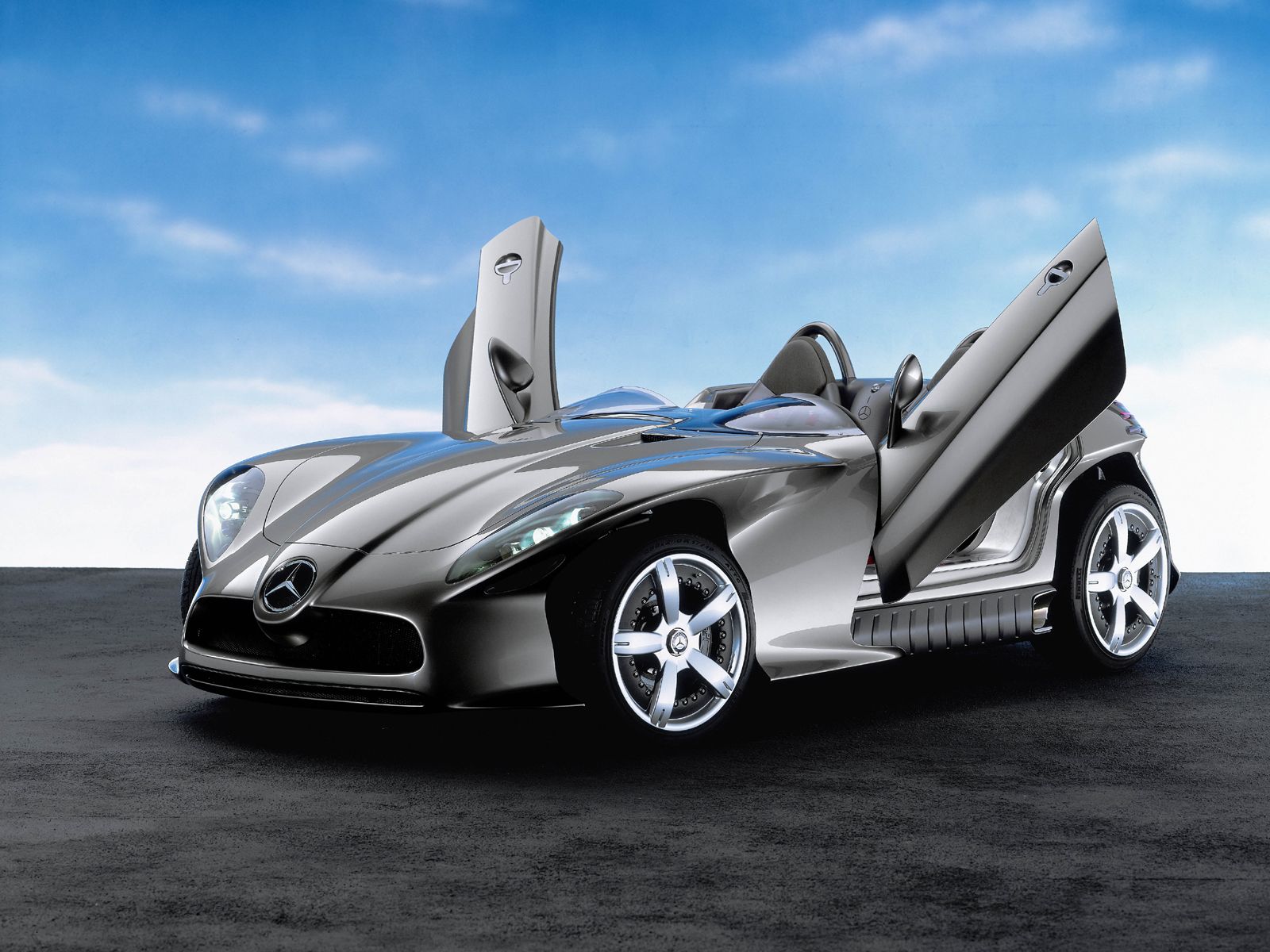
Mercedes-Benz wallpapers 2022 matalie

Mercedes-Benz (German pronunciation:  is a German manufacturer of automobiles, buses, coaches, and trucks. Mercedes-Benz is a division of its parent company, Daimler AG. Mercedes-Benz traces its origins to Karl Benz's creation of the first petrol-powered car, the Benz Patent Motorwagen, patented in January 1886 and Gottlieb Daimler and engineer Wilhelm Maybach's conversion of a stagecoach by the addition of a petrol engine later that year.
The Mercedes automobile was first marketed in 1901 by Daimler Motoren Gesellschaft. The first Mercedes-Benz brand name vehicles were produced in 1926, following the merger of Karl Benz's and Gottlieb Daimler's companies into the Daimler-Benz company.

Mercedes-Benz has introduced many technological and safety innovations that later became common in other vehicles. Mercedes-Benz is one of the most well-known and established automotive brands in the world, and is also the world's oldest automotive brand still in existence today.

Since its inception, Mercedes-Benz had maintained a reputation for its quality and durability. Objective measures looking at passenger vehicles, such as J. D. Power surveys, demonstrated a downturn in reputation in this criteria in the late 1990s and early 2000s. By mid-2005, Mercedes temporarily returned to the industry average for initial quality, a measure of problems after the first 90 days of ownership, according to J.D. Power. In J.D. Power's Initial Quality Study for the first quarter of 2007, Mercedes showed dramatic improvement by climbing from 25th to 5th place, surpassing quality leader Toyota, and earning several awards for its models.


For 2008, Mercedes-Benz's initial quality rating improved by yet another mark, to fourth place. On top of this accolade, it also received the Platinum Plant Quality Award for its Mercedes’ Sindelfingen, Germany assembly plant. As of April 2011, Consumer Reports of the United States has changed their reliability ratings for several Mercedes-Benz vehicles ranking them "the least reliable vehicles in three categories. Six of its 13 models were below average, and the GLK SUV was far below average this year.

Thursday, May 12, 2011

new Ducati V-twin motorcycles I matali

The next new Ducati engine to appear after the Ducati Apollo was the 90°V twin, initial Grand Prix racing versions being 500 cc, and the production bikes were 750 cc. There was also the Ducati 750 Imola Desmo that won at Imola in 1972. These engines had bevel gear shaft drive to the overhead camshaft, and were produced in round, square, and Mille crankcases. In the 1980s these gave way to the belt drive camshaft engines that have continued to this day, in air and liquid cooled form. The Mille used a plain bearing crank, like the belt models.
V-Twin or L-Twin
Generally, any two-cylinder motorcycle engine with its two cylinders at an equidistant opposite angles from the center rotation of the crankshaft is referred to as a V-twin.
 The Ducati V-twin is unique in that the "V" is tilted forward so the front cylinder is nearly parallel to the ground, leading many to refer to it as an "L-Twin" engine instead. Either usage is correct since a "V-twin" engine is not designated by a specific angle.


L-twin refers, in fact, to a configuration with a 90 degree angle between the two cylinders, where the forward cylinder is nearly parallel to the ground.

Two valve engines

Ducati engineer, Fabio Taglioni, once said that when they started building the plain bearing crank, belt driven camshaft engines, instead of the old ball bearing crank,

bevel geared shaft drive camshaft engines, he had gone from making complex engines to making simple ones.

Related Posts Plugin for WordPress, Blogger...